Senior Dissecting Microscope Manufacturer,Supplier and Exporter
Product Code : SEL-M-10859
Quick Answer: Dissection classes use this microscope to view specimens: a jointed revolving arm carries the magnifying lens over the stage, with 10x and 20x eyepieces and a special 83 mm bull's eye lens for a wider field of vision.
Last updated: October 2026
Key Features
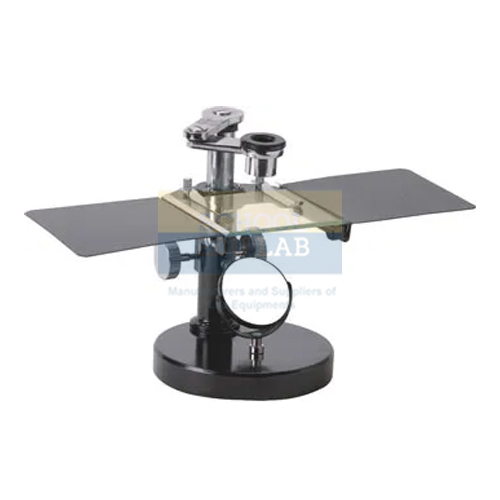
- Jointed revolving arm moves the magnifying lens over the stage area
- Heavy round base with precisely designed body
- Rack and pinion movement for sensitive focusing
- Plano-concave mirror reflects daylight or artificial light onto the object
- Detachable hand rests on both sides of the stage
- Supplied with 10x and 20x eyepieces and a special bull's eye lens, 83 mm diameter
Technical Specifications
| Specification | Value |
|---|---|
| Lens arm | Jointed, revolving, covers the stage area |
| Base | Heavy, round |
| Focusing | Rack and pinion |
| Illumination | Plano-concave mirror (daylight or artificial light) |
| Hand rests | Detachable, both sides of the stage |
| Optics supplied | 10x and 20x eyepieces; bull's eye lens, 83 mm dia. |
About This Product
During a dissection, students need a steady view of the specimen while they work. The detachable hand rests on both sides of the stage give support during dissection, and the jointed revolving arm moves the magnifying lens over the stage area. Replacing the lens with the special 83 mm bull's eye lens increases the field of vision, and rack and pinion movement gives sensitive focusing.
Frequently Asked Questions
Why is a bull's eye lens supplied?
The special bull's eye lens, 83 mm in diameter, can replace the magnifying lens to increase the field of vision over the specimen.
How is the specimen lit?
A plano-concave mirror reflects daylight or artificial light onto the object on the stage.
Related: Microscopes, All Purpose Dissecting Microscope, Stereoscopic Microscope, Reflecting Mirror.
For a quotation on the Senior Dissecting Microscope, contact School Educational Instrument.